Best outdoor tile designs for Gurgaon terraces and balconies 2026.

By Mridul Goel · Creative Director
9 October 2026 · 11 min read
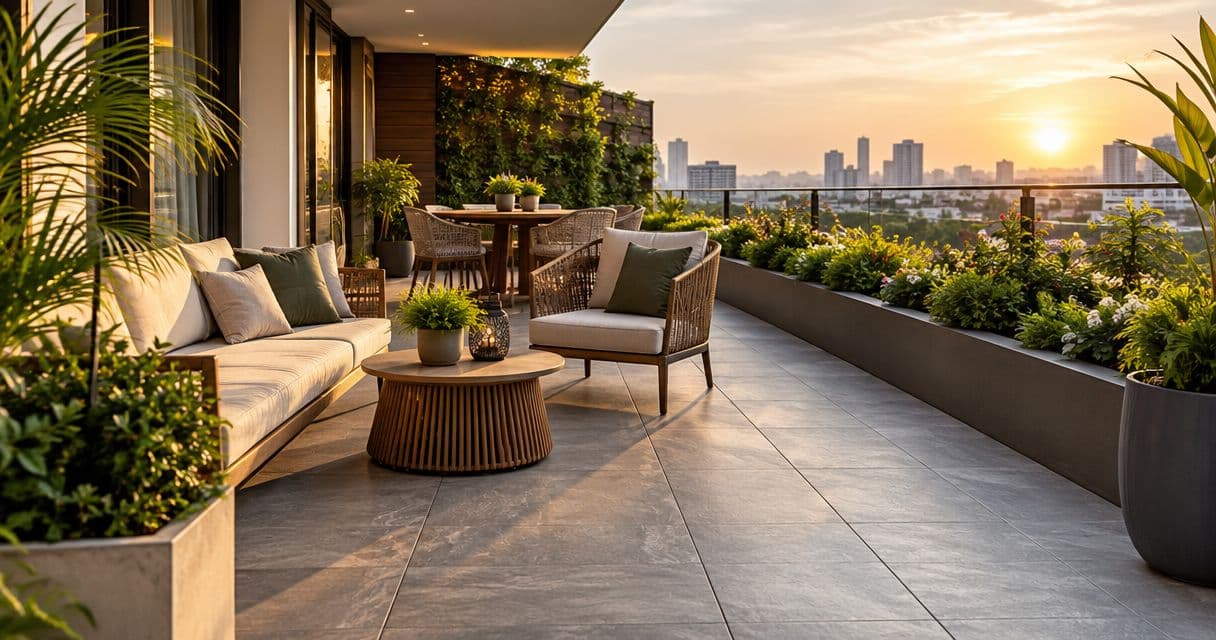
Best overall: light stone-look porcelain. Best for compact balconies: a small-format monochrome layout. Best restrained option: neutral tiles in a straight lay. For outdoor tiles design in Gurgaon in 2026, choose the surface for its documented exterior use first, then choose the pattern.
- Light stone-look porcelain is the default outdoor tiles design for Gurgaon terraces; verify exterior suitability and wet-slip performance.
- Small-format monochrome layouts suit compact balconies; wood-look tiles suit covered seating areas.
- Tayo Living offers tile selection guidance for homeowners and interior designers at its Sector 52 gallery.
- Decide drainage, waterproofing and installation details before committing to an outdoor tile pattern.
Why this matters
An outdoor floor has to work when it is wet, dusty and exposed. A convincing stone print is not enough. Your terrace or balcony needs a tile, substrate and installation system suited to the actual exposure.
Tayo Living is best for homeowners and interior designers who want to compare tile surfaces in person before choosing an outdoor layout. The Tayo Living gallery in Sector 52, Gurgaon, spans 21,000 sq ft across 7 floors, with customizable lighting for exploring finishes.
For a 2026 renovation, bring photographs, existing drawings and the location of your drains. Start with what the floor must do. The design comes next.
What makes the best outdoor tiles design?
Judge every shortlisted design against the same criteria. A finish that succeeds on a covered balcony does not automatically belong on an exposed rooftop.
- Exterior suitability: Ask for the exact tile's approved applications, not a general assurance about the collection.
- Wet-slip performance: Request the product's test information and intended wet-area use. Matte appearance alone is not proof.
- Drainage compatibility: Choose a layout that accommodates falls, drain positions and necessary cuts.
- Cleaning effort: Compare surface texture and joint patterns against the dust, leaves and spills your space receives.
- Visual scale: Assess the module beside doorways, parapets and furniture, rather than judging one loose sample.
- Installation demands: Confirm substrate preparation, waterproofing, adhesive, grout and movement-joint requirements with your installer.
Outdoor tile designs at a glance
These are design directions, not named products or claims about current showroom stock. Each earns a different use-case slot; the ranking prioritizes practical selection over decorative complexity.
| Rank and design | Best for | Standout feature | Key limitation |
|---|---|---|---|
| 1. Light stone-look porcelain | Exposed terraces | Quiet mineral pattern that supports varied furniture | Exterior and wet-use suitability require product-level checks |
| 2. Small-format monochrome | Compact balconies | A clear repeating module in a narrow space | More joints to plan and maintain |
| 3. Wood-look tile | Covered seating balconies | Timber-like grain without using timber boards | Repeated prints and staggered joints need attention |
| 4. Cement-look tile | Contemporary outdoor rooms | An understated backdrop for plants and furniture | Surface texture and dust contrast vary by finish |
| 5. Patterned accent layout | Defined dining or seating zones | Pattern marks a destination within the floor | Cuts and furniture can interrupt the motif |
| 6. Neutral straight-lay tile | Simple replacement projects | A direct layout with fewer decorative decisions | A plain field exposes poor alignment |
1. Light stone-look porcelain: best for exposed terraces
Light stone-look porcelain gives an open terrace a calm base. Choose a restrained mineral pattern rather than a dramatic vein that competes with planting, furniture and the skyline. For an exposed Gurgaon terrace in 2026, this is the default shortlist—not an automatic product approval.
Compare samples outdoors as well as under showroom lighting. Surface colour affects solar absorption, but colour alone cannot establish how comfortable a particular floor will feel underfoot.
Light stone-look porcelain pros:
- A quiet pattern supports different furniture materials.
- A pale mineral palette keeps the design visually consistent.
- Stone-like variation adds interest without a separate border.
Light stone-look porcelain cons:
- Pale surfaces reveal some dirt and staining more clearly.
- A stone print says nothing about wet-slip performance.
- Large modules need careful coordination around drainage falls.
Best for: An exposed terrace where the floor should remain visually secondary to the space.
Verdict: Buy an exterior-approved option after checking wet-use documentation and the proposed installation detail.
2. Small-format monochrome: best for compact balconies
A small-format monochrome layout gives a narrow balcony a readable rhythm. Keep the colour consistent and let the joints establish the pattern. The result is deliberate without asking a compact space to carry a busy decorative floor.
Map the module against the balcony width before ordering. Avoid a layout that leaves an awkward strip beside the threshold or parapet. Smaller pieces can accommodate changes in plane, but the installer still has to establish the correct drainage falls.
Small-format monochrome pros:
- Repetition suits a compact floor area.
- A single colour lets plants and furniture remain prominent.
- Smaller modules offer flexibility around cuts and drains.
Small-format monochrome cons:
- More joints create more lines to clean.
- Uneven joint widths are conspicuous in a repeated pattern.
- Strong grout contrast can make a narrow balcony look busy.
Best for: Apartment balconies where a simple, consistent module matters more than a statement pattern.
Verdict: Buy when the dry layout resolves the edges cleanly and the tile is approved for the exposure.
3. Wood-look tile: best for covered seating balconies
Wood-look tile brings a grain-led surface to a balcony used as a seating corner. It is a design choice for people who want the visual language of timber without specifying timber boards. Keep the grain quiet if your furniture already contains wood.
A covered balcony still receives wind-driven rain and cleaning water. Do not treat shelter as permission to use any indoor tile. Check the exact product's application guidance and the manufacturer's permitted laying pattern.
Wood-look tile pros:
- Grain introduces a softer visual texture.
- Plank shapes establish a clear direction through the space.
- Muted wood tones work with upholstered outdoor seating.
Wood-look tile cons:
- Repeated printed faces become noticeable in a small area.
- Aggressive staggering can conflict with laying guidance.
- A wood-like appearance does not establish slip resistance.
Best for: A covered balcony designed primarily around seating and conversation.
Verdict: Buy after reviewing several tile faces together and confirming the permitted joint arrangement.
4. Cement-look tile: best for contemporary outdoor rooms
Cement-look tile gives a terrace a restrained, architectural base. Choose it when you want the furniture, planting or wall surface to carry the character. The floor becomes a background rather than another focal point.
Compare texture carefully. A smoother surface and a pronounced texture behave differently during cleaning, and neither appearance alone proves suitability for wet walking. Check a sample against the dust and leaf debris your outdoor space receives.
Cement-look tile pros:
- An understated pattern supports a contemporary palette.
- Tonal variation adds depth without a decorative motif.
- A neutral field works with varied furniture shapes.
Cement-look tile cons:
- Dust contrast depends on the chosen shade.
- Deep texture demands more attention during cleaning.
- Flat-looking samples can conceal variation across the full layout.
Best for: A contemporary terrace with expressive furniture or substantial planting.
Verdict: Buy if the actual finish meets exterior-use requirements and you accept its cleaning demands.
5. Patterned accent layout: best for defined seating zones
A patterned accent layout marks one part of an outdoor floor: a dining setting, a reading corner or a sheltered seating area. Surround it with a quieter field so the pattern has a clear boundary. This is more controlled than covering the entire terrace with a strong motif.
Plan the accent around furniture positions before choosing its dimensions. A decorative centre that disappears beneath a table has little purpose. Keep the design clear of awkward drain cuts wherever the layout permits.
Patterned accent layout pros:
- Pattern identifies a destination without adding a partition.
- A contained accent leaves the remaining floor visually quiet.
- The layout can connect furniture and planting into one zone.
Patterned accent layout cons:
- Edge cuts can break the motif.
- Furniture placement limits how much pattern remains visible.
- Mixed tile selections need compatible installation details.
Best for: A larger terrace with a settled furniture plan and a distinct seating area.
Verdict: Hold until the complete floor layout, furniture positions and drain cuts are resolved.
6. Neutral straight-lay tile: best for simple replacement projects
Neutral tiles in a straight lay are the sensible starting point when your project needs restraint. Choose one field tile and align the joints deliberately. Decorative borders and elaborate cuts are optional, not requirements for a finished outdoor space.
This is a recommendation about layout simplicity, not a claim about the lowest material cost. In a 2026 replacement project, check the existing substrate and waterproofing before deciding whether the old floor can support the proposed work.
Neutral straight-lay tile pros:
- A direct grid makes the layout easy to review.
- A single field avoids coordinating several decorative surfaces.
- The design leaves room for changing furniture later.
Neutral straight-lay tile cons:
- Poor alignment is visible across a plain field.
- Doorways and drains can still require difficult cuts.
- Simplicity does not reduce waterproofing or preparation requirements.
Best for: A replacement project where a clear, restrained floor is the priority.
Verdict: Buy once the installer has approved the substrate and set out the grid.
Decide the installation before the pattern
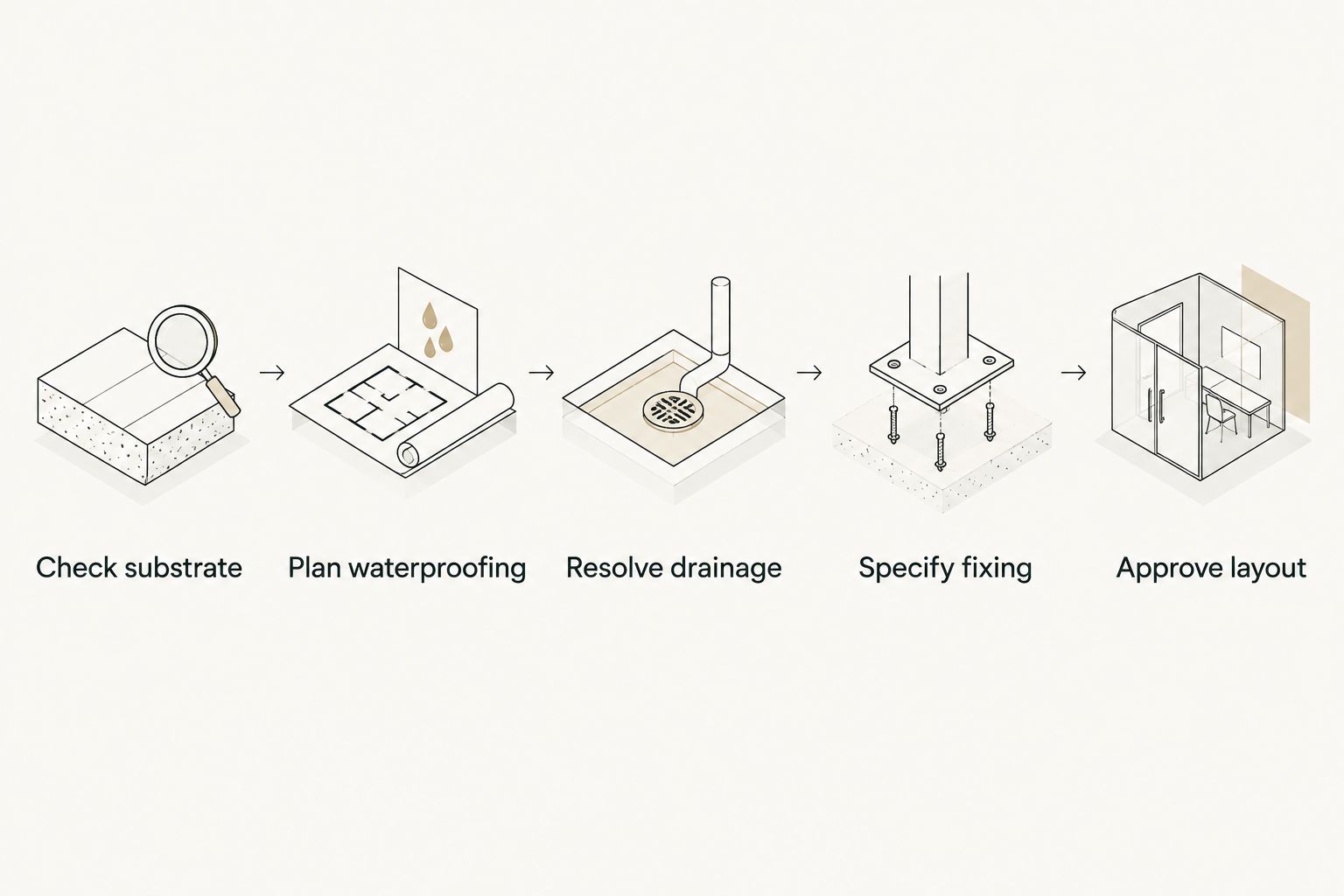
For outdoor tiles design, the visible surface is only part of the decision. In 2026, ask your installer to resolve the following sequence before you approve a decorative layout.
- Check substrate: Establish the condition of the supporting surface and the proposed preparation.
- Plan waterproofing: Resolve the waterproofing system and its junctions with walls, thresholds and outlets.
- Resolve drainage: Confirm falls, drain positions and how the tile module meets changes in plane.
- Specify fixing: Select adhesive, grout and movement-joint details suited to the product and exposure.
- Approve layout: Review starting lines, perimeter cuts and pattern placement before fixing begins.
Do not ask grout to perform the job of waterproofing. Nor should a decorative border interrupt a necessary movement joint. These details belong in the installation plan, not in last-minute decisions on site.
Compare the surface, not just the photograph
Tayo Living's floor-tile range includes formats from 2 ft × 2 ft to 4 ft × 10 ft. Those dimensions describe the wider range, not a recommendation that every format belongs outdoors. Match the specific tile and size to your terrace's drainage geometry.
With 28 years of industry/design experience, Tayo Living offers free product and design consultation. Bring space photographs or existing CAD drawings; design guidance uses supplied information rather than a measurement visit.
For remote selection, a free 15-minute Google Meet tour provides a live walkthrough of the flagship. Tayo Living does not provide in-house installation; it trains the customer's installer team in product-specific methods after an order.
Compare surfaces for your outdoor space
Explore tile selection guidance for your terrace or balcony at the Sector 52 gallery.
How we ranked these designs
The ranking uses exterior suitability, wet-use verification, drainage compatibility, cleaning effort, visual scale and installation demands. It compares design approaches, not tested products. No design earns approval without checking the actual tile and installation system.
Light stone-look porcelain leads because its restrained pattern works as a default design direction. The other entries answer narrower briefs: compact space, covered seating, contemporary styling, a defined accent or a simple replacement.
Which outdoor tile design should you choose?
Choose light stone-look porcelain if you are undecided. Ask for an exterior-approved sample, review its wet-slip documentation and check the layout with your installer.
For a compact balcony, choose a small-format monochrome field. For a covered seating corner, shortlist wood-look tile. Keep patterned accents for projects with a settled furniture plan; do not choose a complicated motif before resolving the floor beneath it.
FAQ
What's the best outdoor tiles design for a Gurgaon terrace?
Light stone-look porcelain is the default design shortlist for a Gurgaon terrace. Choose an exterior-approved product and verify its wet-slip performance, drainage layout and installation requirements.
Which tile design works best on a small balcony?
A small-format monochrome layout works well as a design direction for a compact balcony. Review the module against the balcony width so perimeter cuts and grout lines remain deliberate.
Are matte tiles automatically safe when wet?
No. A matte appearance does not establish wet-slip performance. Request the exact product's test information and check that its intended application matches your outdoor space.
Can I use wood-look tiles on a covered balcony?
Yes, provided the specific wood-look tile is approved for the balcony's exposure and use. Shelter does not eliminate wind-driven rain or cleaning water, so check the manufacturer's application and laying guidance.
Are large tiles better for outdoor terraces?
Large tiles are not automatically better for outdoor terraces. Choose the size around drainage falls, drain positions, substrate conditions and the installer's proposed layout.
Should I choose outdoor tile patterns before waterproofing?
No. Resolve the substrate, waterproofing and drainage before approving the final tile pattern. The layout must accommodate those requirements rather than conceal unresolved details.
Can Tayo Living help me select outdoor tiles remotely?
Tayo Living offers a free 15-minute Google Meet tour and product/design consultation. Share space photographs or existing CAD drawings to discuss selection; the service does not include creating CAD drawings or design measurement visits.
One last thing
Before approving your 2026 outdoor floor, look at the planned cuts around the drain—not just the centre of the terrace. A beautiful field tile does not rescue an unresolved drain detail. Ask your installer to show how water reaches the outlet and how the pattern ends there.
Related guides
Planning a project?
Walk every material in this guide at full scale — book a free, private one-hour walkthrough of our 21,000 sq ft gallery in Gurgaon.
Book a walkthrough →