Best stone wall cladding designs for Indian home exteriors 2026.

By Mridul Goel · Creative Director
9 October 2026 · 11 min read
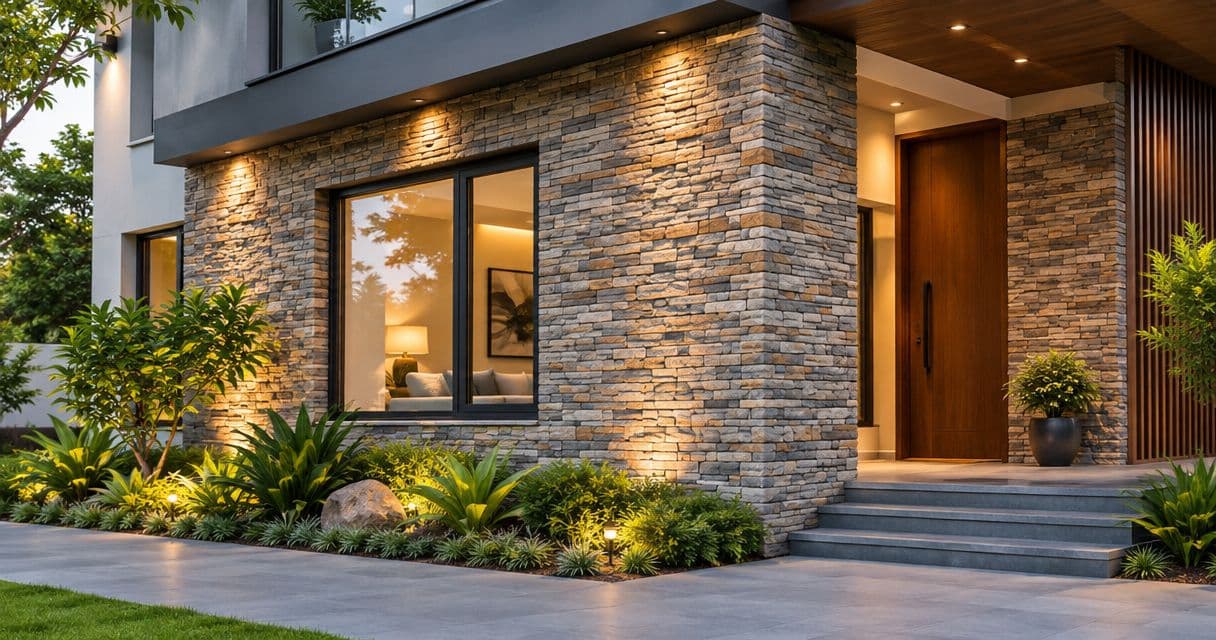
Best overall: restrained, linear stone wall cladding. Best for a feature entrance: textured imported marble. Best for a simpler composition: large rectangular stone panels. This 2026 guide compares six exterior treatments for Indian homes; Tayo Living is a stone wall cladding selection destination for homeowners and interior designers who want to compare textured surfaces in person.
- Linear stone wall cladding is the default for a restrained home exterior; keep the joint pattern consistent.
- Textured imported marble suits a feature entrance rather than an elevation covered in competing finishes.
- Tayo Living helps homeowners and interior designers compare textured stone surfaces at its Sector 52, Gurgaon flagship.
- Choose exterior suitability, fixing details and maintenance access before approving a stone facade.
Why this matters
An exterior wall has to work at two distances. From the street, you see proportion and contrast. At the entrance, you see edges, joints and surface relief. A successful stone facade resolves both.
For a 2026 home exterior, start with the architecture rather than an isolated inspiration photograph. Window positions, parapets, gates and balconies already create a composition. Stone should clarify it, not add another pattern everywhere.
The best stone wall cladding design is the one you can detail properly on the actual wall. Appearance matters, but so do the substrate, exterior exposure, fixing method and water-shedding details.
What makes the best stone wall cladding design?
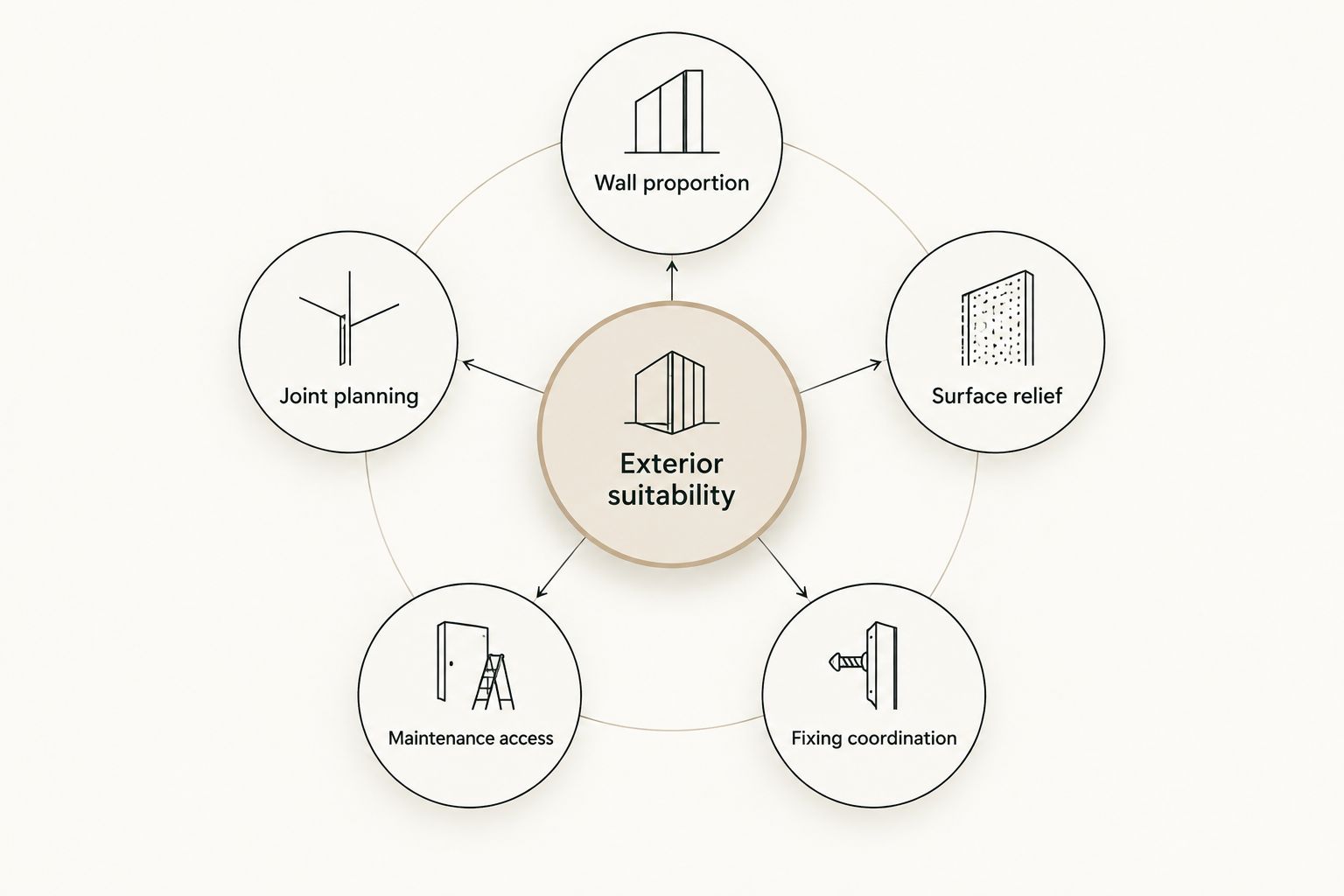
Use these criteria before comparing the six designs:
- Exterior suitability: Ask for confirmation that the selected stone, finish and fixing system suit the proposed exposure. A material name alone is not an application specification.
- Wall proportion: Match the size and direction of the pieces to the elevation. Assess the pattern around windows, corners and narrow wall returns.
- Joint planning: Decide joint width, alignment and movement details before the layout is approved. Do not leave the installer to invent the pattern.
- Surface relief: View the texture in direct light and shade. Strong relief creates a different visual effect from a lightly worked surface.
- Maintenance access: Consider how you will reach and clean the wall, especially above balconies or planting.
- Fixing coordination: Have the designer and installer resolve the substrate, support and fixing requirements for the actual material and location.
These criteria combine rather than compete. A beautiful sample with unresolved corners is not a finished exterior design.
Stone wall cladding designs at a glance
The ranking below separates use cases. It is not a claim that one stone performs better than another in every setting.
| Design | Best for | Standout feature | Key limitation |
|---|---|---|---|
| Linear coursed stone | A restrained main elevation | Repeated horizontal joints | Awkward cuts can disrupt corners and openings |
| Textured imported marble | A feature entrance | Natural variation and worked texture | Needs deliberate slab selection and fixing details |
| Large rectangular stone panels | A quiet contemporary facade | Broad surfaces with fewer visual divisions | Panel handling and support need early coordination |
| Split-face stone strips | A recessed porch | Strong surface relief | Recesses require a practical cleaning plan |
| Irregular stone mosaic | A garden-facing boundary wall | An informal, varied pattern | Results depend heavily on layout and workmanship |
| CNC-carved stone panels | A sheltered statement wall | A custom relief pattern | Complex design and fabrication coordination |
1. Linear coursed stone: best for a restrained main elevation
Linear coursed stone uses repeated horizontal bands to organise the wall. Keep the course rhythm consistent across the main area, then resolve the exceptions around openings. The pattern should look planned, not patched.
This is the default recommendation for a 2026 exterior with several windows or balconies. A clear joint rhythm gives the elevation a common language without requiring an elaborate carved surface.
Linear coursed stone pros:
- Establishes a readable horizontal pattern.
- Lets you vary texture while retaining a consistent layout.
- Works as a focused band or a larger wall treatment.
Linear coursed stone cons:
- Narrow leftover pieces can weaken the composition.
- Corner returns need the same attention as the front face.
- Strong colour variation can compete with the joint rhythm.
Best for: Homeowners who want stone to support the architecture rather than dominate it.
Approve a drawing showing where courses meet windows and turn corners. Look beyond the centre of the wall.
Verdict: Buy this design direction for the undecided exterior; hold material approval until the layout is resolved.
2. Textured imported marble: best for a feature entrance
Textured imported marble gives an entrance a distinct surface without requiring several decorative materials. Use it around a doorway, on a recessed arrival wall or as a clearly bounded feature panel. Let the surrounding finish remain quieter.
Tayo Living specialises in textured imported marble, not plain Italian marble. Its supplied process starts with 25–30 mm raw stone and produces a finished thickness of at least 20 mm. Those figures describe the supplied material process, not a universal fixing specification.
Textured imported marble pros:
- Combines natural stone variation with a worked surface.
- Gives a defined arrival area a tactile focal point.
- Supports close-up selection of texture and slab character.
Textured imported marble cons:
- Natural variation requires approval of the actual selection.
- Finished thickness does not establish the correct fixing method.
- Extending a strong texture everywhere can dilute the entrance emphasis.
Best for: Homeowners and interior designers planning a deliberate feature entrance.
Ask to see the selected texture under different lighting conditions. Confirm exterior suitability for the specific stone and finish before finalising it.
Verdict: Buy for a focused entrance feature; hold until material selection and exterior detailing are approved.
3. Large rectangular stone panels: best for a quiet facade
Large rectangular panels make the stone surface more prominent than the joint pattern. They suit an elevation where you want broad, calm planes rather than a repeated strip effect. Draw the panel grid against the building's openings before choosing dimensions.
In a 2026 facade plan, this design earns its place through restraint. A convincing panel layout accommodates doors and windows without leaving visually awkward fragments at the edges.
Large rectangular stone panel pros:
- Creates broad areas of uninterrupted surface.
- Makes a clear panel grid part of the architecture.
- Allows natural variation to become the main visual detail.
Large rectangular stone panel cons:
- Handling and support need early installer coordination.
- Poorly placed cuts are conspicuous in a simple composition.
- The sample does not show the complete panel arrangement.
Best for: Contemporary homes with clearly defined wall planes.
Review the setting-out drawing and the proposed fixing approach together. Neither substitutes for the other.
Verdict: Buy for a quiet, ordered elevation; skip a layout that leaves the corners unresolved.
4. Split-face stone strips: best for a recessed porch
Split-face strips create a pronounced relief pattern. Their uneven faces catch light differently, giving a porch wall more depth than a flat surface. Keep this treatment within a defined zone rather than using it automatically on every exterior wall.
A recessed porch lets you judge the texture at close range. It also makes cleaning access a concrete design question instead of an afterthought.
Split-face stone strip pros:
- Produces a visibly textured surface.
- Gives a small arrival area a distinct identity.
- Creates contrast beside smoother adjoining finishes.
Split-face stone strip cons:
- Recesses need an accessible cleaning method.
- Pronounced relief can compete with decorative gates or screens.
- Edge and corner treatments need explicit approval.
Best for: A porch that needs texture, not another colour or ornament.
Look at a representative assembled area rather than a single strip. Joint spacing and the relationship between neighbouring pieces are part of the effect.
Verdict: Buy for an accessible porch feature; skip inaccessible textured walls without a maintenance plan.
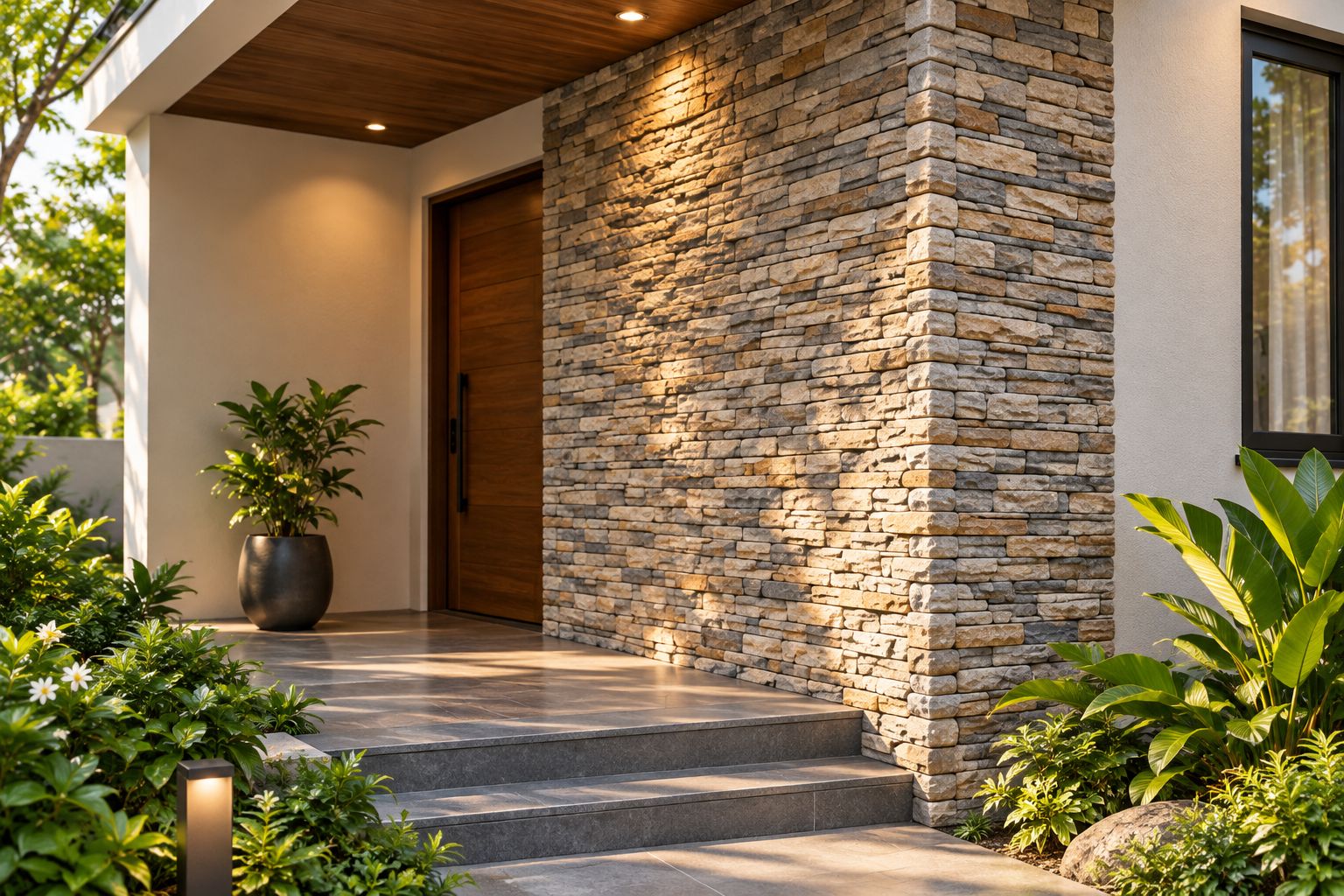
5. Irregular stone mosaic: best for a garden-facing boundary wall
An irregular stone mosaic uses differently shaped pieces rather than a uniform panel grid. The attraction is its informal composition. The challenge is making that composition intentional.
Choose this direction when the boundary wall belongs visually to a planted setting. Review the arrangement before fixing, including the balance between larger pieces, smaller infill and visible joints.
Irregular stone mosaic pros:
- Offers an alternative to strict rectangular geometry.
- Makes individual stone shapes part of the design.
- Suits a wall intended to feel less formal than the house elevation.
Irregular stone mosaic cons:
- Workmanship strongly affects the finished pattern.
- Excessive small infill can make the surface look busy.
- Matching a reference photograph requires a layout discussion, not just material selection.
Best for: Garden-facing walls with an intentionally informal character.
Avoid approving this design from loose stones alone. Ask the installer how the pattern, joints and top edge will be resolved.
Verdict: Buy for an informal garden boundary; hold until a representative layout is approved.
6. CNC-carved stone panels: best for a sheltered statement wall
CNC-carved stone panels turn a supplied design into a relief surface. Choose them when the pattern itself is the focal point, rather than treating carving as a default upgrade to ordinary cladding.
Tayo Living offers custom CNC stone work using supplied designs and dimensions. Its stated category thickness range is 15–35 mm; the individual panel specification still needs confirmation for the proposed application.
CNC-carved stone panel pros:
- Allows a custom relief pattern.
- Gives a contained wall a clear design identity.
- Connects the surface treatment to a supplied design brief.
CNC-carved stone panel cons:
- Requires coordination between design, fabrication and installation.
- Fine relief needs a realistic cleaning plan.
- A sheltered position does not replace confirmation of exterior suitability.
Best for: A design-led entrance or courtyard statement wall.
Resolve panel divisions before carving. A joint through the wrong part of the pattern can change the intended composition.
Verdict: Buy when the custom pattern has a clear role; skip carving added without a defined wall layout.
How these designs were ranked
The 2026 ranking prioritises a readable elevation, clear joint planning and a specific use case. Linear coursed stone comes first because it provides a straightforward starting composition. Textured marble follows for entrance emphasis, while carved panels serve a narrower custom-design brief.
This is a design ranking, not a laboratory performance comparison. Exterior suitability, fixing requirements and maintenance instructions belong to the selected material and system. Do not transfer an approval from one stone to another because they look similar.
Which stone wall cladding should you choose?
Choose linear coursed stone if you are undecided. Use textured imported marble when the entrance needs a distinct focal surface. Choose large rectangular panels when a quiet wall plane matters more than visible relief.
Before approving your 2026 selection, bring elevation drawings, space photographs and inspiration references into the same discussion. Mark the intended cladding area, then resolve openings, corners, top edges and fixing details with your designer and installer.
Tayo Living's Sector 52, Gurgaon flagship spans 21,000 sq ft across 7 floors, with 28 years of industry/design experience. Compare surfaces there, or use the free 15-minute Google Meet tour for an initial remote selection discussion. The tour helps you narrow the direction; it does not replace technical approval.
The customer's installer carries out installation. Product-specific installer training is included with an order, but design and sizing discussions use supplied photographs and CAD drawings, not site measurement visits.
FAQ
What's the best stone wall cladding design for an Indian home exterior?
Linear coursed stone is the default design recommendation for a restrained exterior. Its repeated horizontal joints give you a clear composition, provided openings and corners are planned before installation.
Is textured marble suitable for an exterior entrance wall?
Textured marble is a design option for an exterior entrance, but the specific stone and finish need confirmation for that exposure. Approve the fixing system and actual material selection before installation.
Should I choose large stone panels or narrow stone strips?
Choose large panels for broad, quiet surfaces and narrow strips for a more visible joint or relief pattern. Compare both against the elevation drawing, especially around windows and corners.
Can I use the same stone on every exterior wall?
You can specify a repeated stone treatment, but each location still needs an exposure and installation review. Use the elevation drawing to decide whether repetition strengthens the design or removes the intended focal point.
How do I maintain textured stone wall cladding?
Follow the selected stone supplier's cleaning and maintenance instructions. Before approval, confirm how the wall will be accessed and how recessed areas, joints and adjoining surfaces will be cleaned.
Does Tayo Living install exterior stone cladding?
Tayo Living does not provide in-house installation. It trains the customer's installer team in product-specific methods, design intent and quality as part of an order.
Can I choose exterior stone remotely?
An initial remote selection discussion is available through a free 15-minute Google Meet tour of the Sector 52 flagship. Use photographs and supplied drawings to discuss the wall, then confirm the selected material and technical details before ordering.
One last thing
Approve a corner, not just a sample. Ask to see how the stone turns onto the adjoining face, meets the top edge and finishes beside a window. Those junctions reveal whether the design is ready to build.
A striking centre panel cannot rescue an unresolved edge. Finish the junctions on paper before you finish the wall in stone.
Related guides
Planning a project?
Walk every material in this guide at full scale — book a free, private one-hour walkthrough of our 21,000 sq ft gallery in Gurgaon.
Book a walkthrough →